The choice between a wired and a wireless system is one of the first questions we hear with every order for alarm installation in Bielsko-Biała and the surrounding area. Both solutions can protect a home effectively, but they differ in how they are installed, in running costs and in how well they suit a particular building. In this article we explain when a wireless alarm is the better choice, when a classic cabled installation works better, and when a hybrid system is the most sensible option.
How does a wired alarm work, and how does a wireless one?
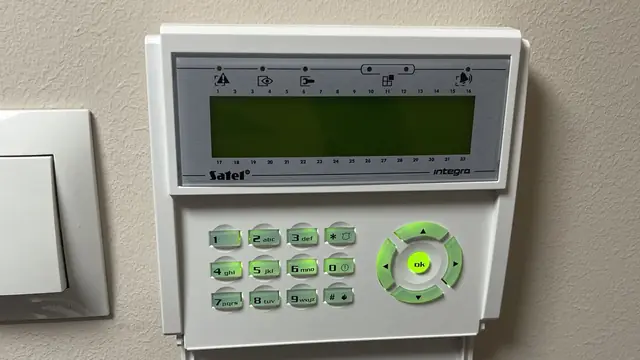
In a wired system, every detector, siren and keypad is connected to the alarm control panel by cable. The cable provides both power and communication. The control panel knows the status of each device at all times, and cutting a cable is detected as tampering.
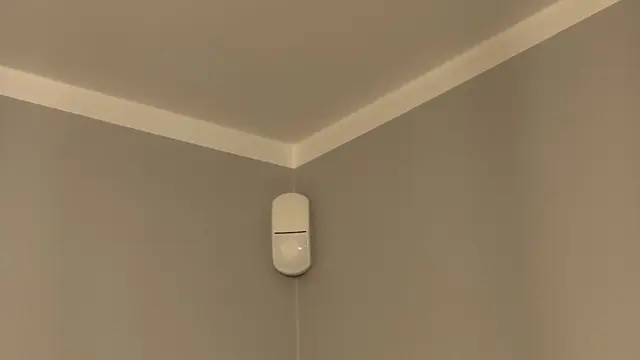
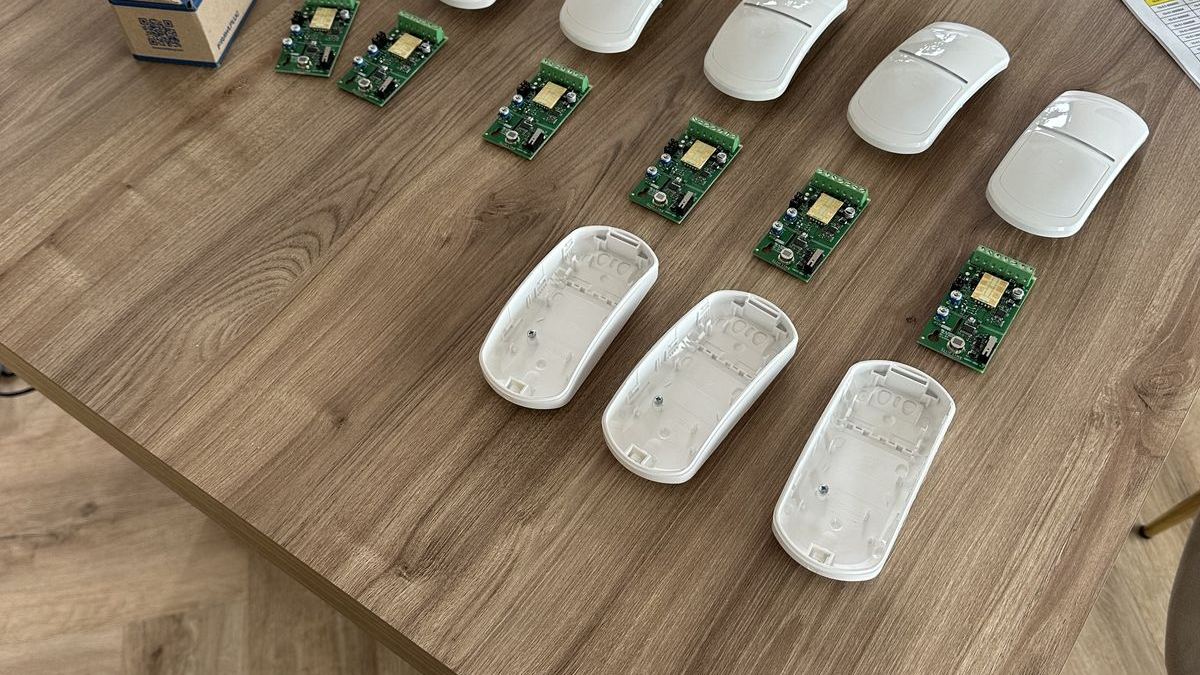
In a wireless system, detectors communicate with the control panel by radio and are battery-powered. Modern systems such as Satel ABAX 2 use two-way transmission: the control panel not only receives signals from the detectors but also polls them, confirms receipt and can change their settings remotely. This is a big difference compared with cheap one-way kits, in which the detector simply "sends and hopes" that someone has received it.
Wired alarms – advantages and limitations
A cabled installation has long been regarded as the most reliable solution, and in many situations it still is.
- No batteries in the detectors – the devices are powered by the control panel, which has its own backup battery. There is no need to remember to replace cells.
- Resistance to radio interference – the signal travels through a cable, so jamming attempts have no effect on it.
- Lower cost per detector – wired devices are usually cheaper than their wireless counterparts.
- High scalability – control panels such as Satel INTEGRA support extensive installations with many zones, expanders and modules.
The main limitation is the need to run cables. In a house under construction this is not a problem, but in a finished interior it means chasing walls, trunking or compromises in detector placement.
Wireless alarms – when do they make the most sense?
A wireless alarm is above all about convenience and speed of installation. Installation in a finished home takes less time and does not require renovation work.
- No chasing and no mess – an ideal solution for renovated homes, flats and historic buildings.
- Flexibility – a detector can easily be moved when the room layout changes.
- Protection of hard-to-reach places – a detached garage, summer house or utility room to which it is not worth running a cable.
- Expandability – adding more detectors in the future is simple.
However, there are a few things to bear in mind. Wireless detectors are more expensive, need periodic battery replacement, and radio range depends on the building's construction – thick reinforced concrete walls or floors can limit it. That is why, before installation, it is worth measuring the signal level at the planned detector locations.
Battery life
In good two-way systems, detector batteries usually last several years, although much depends on the type of device, the polling frequency and the number of events. A detector in a busy hallway will use energy faster than a magnetic contact on a rarely opened window. It is important that the control panel warns of low battery well in advance – in Satel or Bosch systems this is standard, and the notification can also be sent to a smartphone.
Resistance to jamming
This is clients' most common concern. Professional wireless systems detect attempts to jam the radio band and treat them as an alarm event or a fault, of which the user is notified immediately. Two-way communication, encrypted transmission and detector presence supervision make disabling such a system much harder than with cheap supermarket kits. When choosing equipment, look for compliance with the PN-EN 50131 standard and the security grade – Grade 2 is usually used for detached houses.
Hybrid systems – the best of both worlds
In practice, we increasingly propose a mixed solution. The alarm control panel is wired, some detectors are connected by cable where cables already exist or are easy to run, and in the remaining places we install radio devices.
Example: a Satel INTEGRA control panel with an ABAX 2 system controller makes it possible to combine classic wired detectors with wireless motion detectors, magnetic contacts or sirens. Similar capabilities – depending on the control panel model – are offered by other Satel lines as well as Bosch systems. This way, you can keep the reliability of cables in key zones and the flexibility of radio where a cable would be a problem.
A hybrid system works particularly well when extending an existing installation – instead of replacing everything, you simply add a radio module and new detectors.
New house or existing building?
House under construction
If the house is at the shell stage or before plastering, it is definitely worth running alarm cabling. The cost of the cables is small relative to the whole investment, and it gives you complete freedom in the future. It is also a good time to plan cables for cameras, a video intercom and the network – you can read more about this on our page dedicated to LAN and Wi-Fi installations. Even if you are planning a modest system today, empty conduits and spare cables will make expansion easier.
Finished house
In an occupied home we most often choose a wireless or hybrid system. The control panel goes where there is power and, if needed, internet access, and we install the detectors without interfering with the walls. Where cables already exist – for example left over from an old alarm – they can be reused.
What should you look for when choosing a system?
- Manufacturer and service – proven brands such as Satel and Bosch provide access to parts, firmware updates and support for years.
- Communication and notifications – a GSM/LTE or Ethernet module lets you control the alarm from your phone and receive push notifications.
- Integration with CCTV – connecting the alarm to cameras allows quick verification of an event. See how we combine these systems as part of our CCTV service.
- Outdoor detectors – perimeter protection detects an intruder before they reach the door.
- Professional installation – even the best equipment, if poorly positioned, causes false alarms or dead zones.
Summary – what to choose in 2026?
There is no single answer for everyone. In a new house, the best choice is a wired or hybrid installation with well-planned cabling. In a finished home, a modern two-way wireless alarm will provide a high level of protection without renovation work. The most important thing is that the system is matched to the building, the household's lifestyle and the real threats – not to the lowest kit price. You will find details of our offer on the alarm systems page.
CSAFE installs alarms in Bielsko-Biała and the surrounding area – our service area includes Żywiec, Kęty, Andrychów, Skoczów, Czechowice-Dziedzice, Pszczyna, Cieszyn and Oświęcim. We will come over, assess the building and prepare a free quote. Call 505 298 048 or write to us via the contact form.
Frequently asked questions
Is a wireless alarm as secure as a wired one?
A professional two-way wireless system with encryption and jamming detection provides a high level of protection comparable to a wired installation. A proven manufacturer and correct installation are key.
How often do batteries in wireless detectors need replacing?
In good systems, batteries usually last several years, depending on the type of detector and how intensively it is used. The control panel warns of low battery in advance.
Can wired and wireless detectors be combined in one system?
Yes, this is known as a hybrid system. A radio controller that supports wireless detectors is added to a wired control panel, e.g. Satel INTEGRA.
Which alarm should I choose for a finished house?
We most often recommend a wireless or hybrid system that does not require chasing walls. Existing cables, e.g. from an old alarm, can be reused.