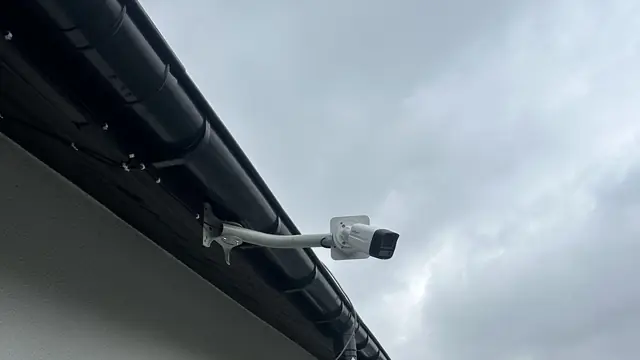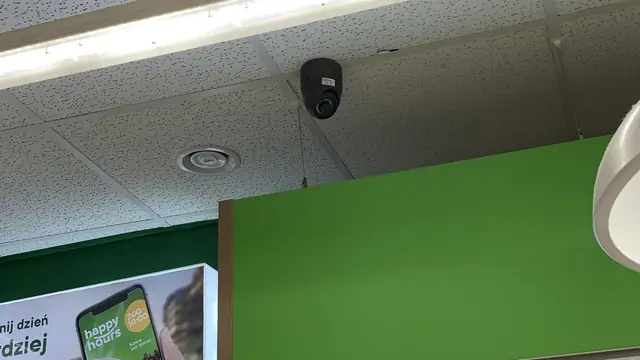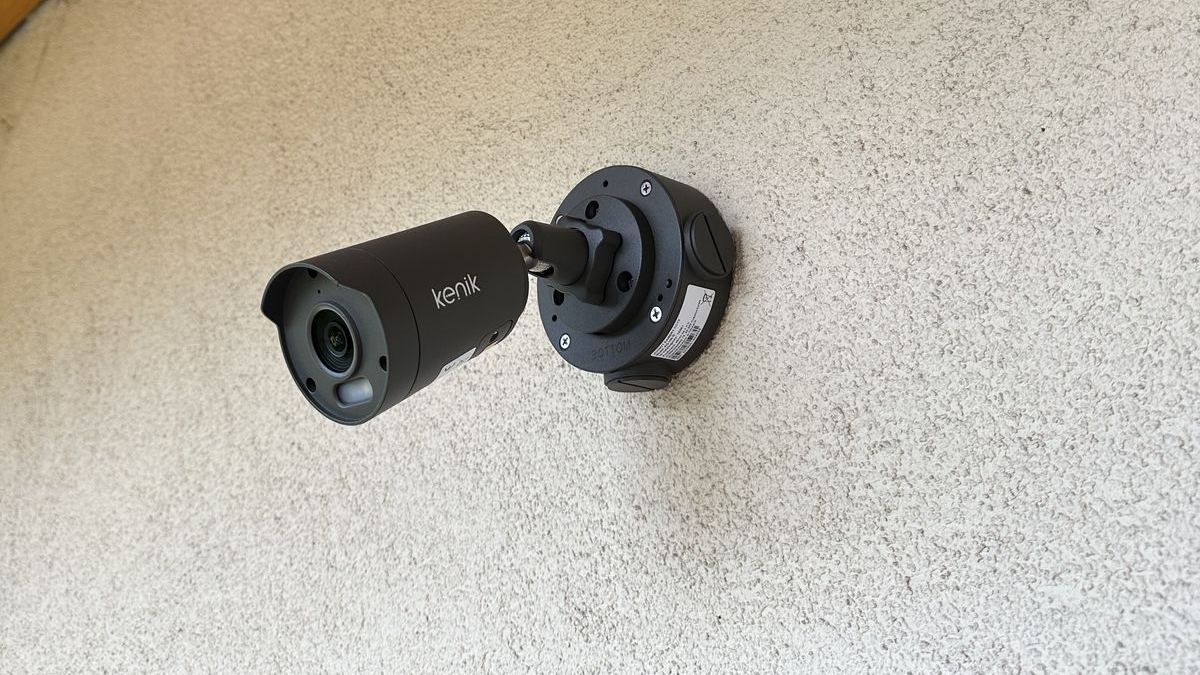
Anyone who has had ordinary CCTV with motion detection knows the problem: the phone goes off every few minutes because the camera reacted to swaying branches, a passing car with its headlights on or the neighbour's cat. After a week the notifications get switched off and the system loses half its value. The answer is AI cameras with human and vehicle detection, which can tell a relevant event apart from background noise. We explain how they work, what features they offer and when they are really worth investing in.
How AI cameras with human and vehicle detection work
Traditional motion detection compares successive frames and reacts when a certain number of pixels change. It does not know what moved. Cameras with deep learning-based analytics contain a processor that recognises shapes and classifies objects. As a result, the camera "knows" that a person or a vehicle has appeared in the frame and can react only to such events.
With the two most popular manufacturers we work with, these technologies have their own names:
- Dahua WizSense – a series of cameras and recorders with intelligent analytics, offering among other things SMD (Smart Motion Detection) and perimeter protection with human and vehicle classification;
- Hikvision AcuSense – a solution that filters alarms, leaving only those triggered by people and vehicles, often combined with active deterrence.
The analysis takes place locally – in the camera or in the recorder – without the need to send the video to an external cloud.
Fewer false alarms
This is the most important benefit. When the system reacts only to people and vehicles, notifications make sense again. Leaves, rain, snow, lighting changes and small animals are largely ignored. However, it is worth having realistic expectations: no analytics is infallible. Effectiveness depends on correct camera positioning, mounting height, scene lighting and the distance of the object. That is why the design and careful configuration after installation are so important.
Line crossing and intrusion zones
AI cameras offer perimeter protection rules which, combined with object classification, deliver very precise operation:
- Line crossing (tripwire) – you draw a virtual line on the image, e.g. along the fence, and set the direction. An alarm is triggered when a person crosses the line in the set direction.
- Intrusion (zone entry) – you define an area, e.g. the driveway or terrace, and the system reacts when a person walks into it or a vehicle drives into it.
- Schedules – rules can be active only at night or only when nobody is at home.
This means you can, for example, ignore cars driving along the street but react to every vehicle that enters the property.
Active deterrence: light and siren
Some AI cameras have a built-in strobe or steady white light and a speaker with a siren. After detecting a person in a zone, the camera can switch on the light, sound an alert or play a recorded message. At Dahua such models are usually labelled as cameras with Active Deterrence, at Hikvision as ColorVu or AcuSense models with deterrence.
This kind of reaction works preventively – the intruder knows they have been spotted before any damage is done. However, deterrence does not replace an alarm system with detectors inside the building and notifications. The best results come from combining both solutions.
Smart search of recordings
The second big advantage of AI shows up after the event. Instead of scrolling through hours of footage, you can filter events in the recorder or app, selecting e.g. only people or only vehicles within a given time range. More advanced recorders also allow searching by attributes such as clothing colour or vehicle type – the extent of these features depends on the specific camera and recorder model. In practice, checking who approached the gate at night takes a moment, not an hour.
What to bear in mind when choosing
- Camera and recorder compatibility – to use the full range of AI features, it is best to combine cameras and a recorder from the same manufacturer's line. An older recorder may record the video but will not handle events and search.
- Mounting height and angle – analytics works best when the camera sees a person from the side or slightly from above, not directly from above. Mounting too high reduces effectiveness.
- Night-time illumination – the camera must "see" an object to classify it. Models with powerful infrared or white light work well.
- Distance – manufacturers specify recommended detection ranges. A person at the edge of a large plot may be too small for a camera with a wide-angle lens to recognise correctly.
- Configuration – zones, lines, sensitivity and schedules need to be tailored to the specific location. Default settings are rarely optimal.
AI cameras, alarm systems and video intercoms
Events detected by AI cameras can be used more widely than just for app notifications. For example, the recorder can send a signal to an alarm output that triggers a siren or notifies the alarm control panel. In turn, footage from the camera at the gate can be displayed on the video intercom monitor, so the household can immediately see who is approaching the property. Such integrations require checking equipment compatibility, but they significantly increase the convenience and effectiveness of the whole system.
When are AI cameras worth the investment?
Cameras with human and vehicle analytics cost more than simple models, but in many situations the difference quickly pays for itself. We particularly recommend them when:
- you want to receive notifications on your phone and act on them;
- there is a lot of greenery, trees, shrubs or a busy street in the frame;
- you are protecting a large area, e.g. a property with a big garden, a business, a yard or a warehouse;
- the CCTV is to work with a security company or an alarm system;
- you want to be able to search recordings quickly.
On the other hand, in simple applications – e.g. a camera above a shop till or a view of a stairwell without notifications – an ordinary camera with good image quality may be perfectly sufficient. Nor do you need to install AI everywhere: often one or two smart cameras at key points are enough, and the rest of the system can be filled in with cheaper models.
Summary
Dahua WizSense and Hikvision AcuSense are now standard in modern CCTV installations. Human and vehicle classification reduces false alarms, line and zone rules allow precise protection of the area, active deterrence works preventively, and smart search saves time. The prerequisite is a good choice of equipment and careful configuration. You can read more about our offer on the CCTV page.
Our area: Bielsko-Biała and the surrounding area: Żywiec, Kęty, Andrychów, Skoczów, Czechowice-Dziedzice, Pszczyna, Cieszyn and Oświęcim. We will advise you on where AI cameras make sense and prepare a free quote. Call: 505 298 048 or write to us.
Frequently asked questions
What is the difference between motion detection and human detection?
Classic motion detection reacts to any change in the image, including leaves, shadows or raindrops. A camera with AI analytics classifies the object and can raise an alarm only when it recognises a person or a vehicle.
Do AI cameras require a subscription or the cloud?
WizSense and AcuSense cameras analyse the image locally, in the camera itself or in the recorder. They do not need a paid cloud service for this, and notifications are sent to the manufacturer's app.
Can AI cameras be added to an existing CCTV system?
Often yes, but the recorder's compatibility needs to be checked. An older recorder may record video from a new camera but will not always handle its AI events and smart search.
Won't active deterrence disturb the neighbours?
The light and siren can be configured to switch on only in specific zones and at specific times, and only after a person is detected. This way they are not triggered unnecessarily.