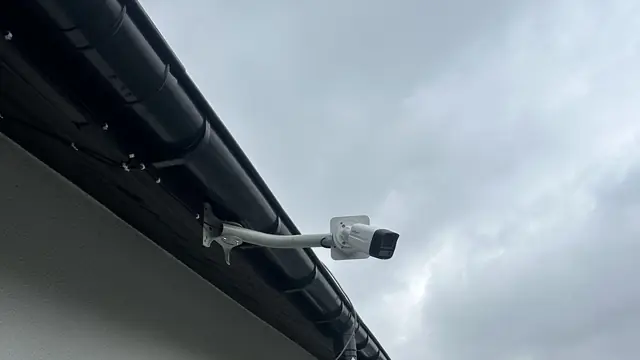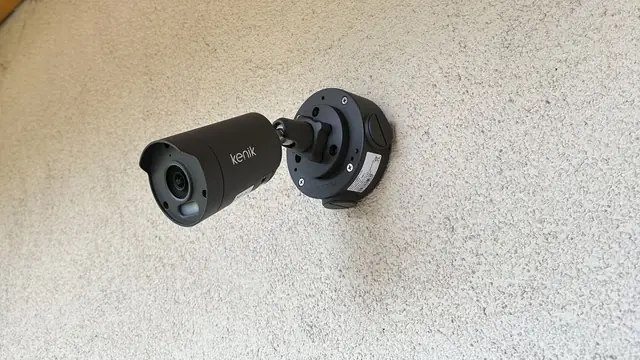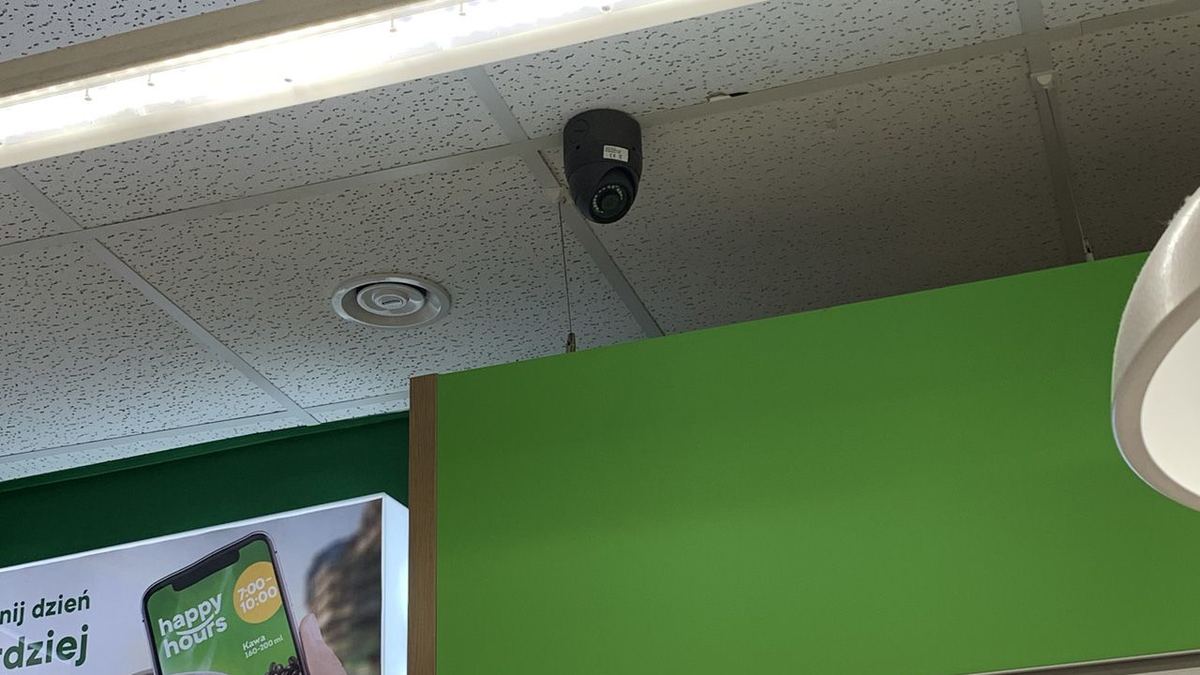
Cameras are now found in businesses, on housing estates and on private homes. With them comes a question: how do CCTV and GDPR relate to each other, and what obligations does the system owner have? As CCTV installers, we often help clients plan camera placement so that the cameras do their job without infringing other people's privacy. In this article we have gathered the key rules for three typical situations: a business with employees, a housing community and a detached house.
Disclaimer: this article is for information purposes only and does not constitute legal advice. In specific situations, especially disputed ones, it is worth consulting a lawyer or a data protection officer.
CCTV and GDPR – why camera footage is personal data
The image of a person who can be identified is personal data. The same applies to a vehicle registration number combined with other information. So if a camera records people, the system's controller is processing personal data and – apart from the exemption for purely household purposes – must comply with the GDPR. Among other things, this means having a legal basis, defining the purpose, limiting the scope of recording to the necessary minimum, securing the data and informing the people being recorded.
CCTV in the workplace: Article 22² of the Labour Code
Employers who want to monitor employees must, above all, comply with Article 22² of the Polish Labour Code (Kodeks pracy). This provision sets out in detail when and how video surveillance may be used in the workplace.
Permitted purposes of CCTV
An employer may introduce special supervision of the workplace premises or the area around them in the form of technical means enabling image recording if this is necessary to:
- ensure the safety of employees,
- protect property,
- control production,
- keep confidential information whose disclosure could cause harm to the employer.
CCTV may not be used to monitor employees for other purposes, e.g. to continuously observe how quickly someone carries out their duties, if this does not fall within the above list.
Where cameras are not allowed
As a rule, CCTV does not cover sanitary facilities, changing rooms, canteens and smoking rooms, or premises made available to the company trade union. An exception applies to the first four categories of premises: a camera may be installed there only if it is necessary to achieve the stated purpose and does not infringe the dignity or other personal rights of employees, in particular through the use of techniques that make it impossible to recognise the people present.
Recording retention period
The employer processes recordings solely for the purposes for which they were collected and keeps them for no longer than 3 months from the date of recording. If a recording constitutes evidence in proceedings conducted under the law, or the employer has learnt that it may constitute such evidence, this period is extended until the proceedings are finally concluded. After these periods have expired, the recordings must be destroyed, unless separate regulations provide otherwise. In practice, this means the recorder should be configured to automatically overwrite or delete older recordings.
Information obligations towards employees
- The purposes, scope and manner of use of CCTV are set out in the collective labour agreement, in the work regulations or in a notice if the employer is not covered by an agreement and is not required to establish work regulations.
- Employees are informed of the introduction of CCTV in the manner customary at the given employer, no later than 2 weeks before it is launched.
- New employees are given this information in writing before they start work.
- Monitored premises and areas are marked in a visible and legible way, using appropriate signs or audio announcements, no later than one day before CCTV is launched.
In addition, the employer, as data controller, fulfils the information obligation under Article 13 GDPR – including towards customers and visitors who appear in the cameras' field of view.
CCTV in a housing community
A housing community (wspólnota mieszkaniowa) that installs cameras in stairwells, in the car park or by the bin area becomes a data controller. The basis for processing is usually legitimate interest (Article 6(1)(f) GDPR), e.g. protection of property and the safety of residents. A few rules are worth remembering:
- the decision on CCTV should be taken in the manner provided for the community – in practice, most often by a resolution of the flat owners;
- cameras should not cover the inside of flats, the doors of specific flats in a way that allows residents' lives to be tracked, or the windows of neighbouring buildings;
- it should be specified who has access to the recordings, and access should be limited to the necessary persons (e.g. the property manager);
- the recording retention period should be appropriate to the purpose – the GDPR does not give a fixed number of days here, but the principle of data minimisation applies;
- CCTV signs with basic information should be placed at the entrances, indicating where the full privacy notice is available.
Recordings should be shared with the police or an insurer on the basis of legal provisions or a justified request, not "at a neighbour's request".
CCTV at a private home and the household exemption
The GDPR does not apply to the processing of data by a natural person in the course of a purely personal or household activity. If the cameras on your house cover only your property – the driveway, garden, front door – you usually benefit from this exemption.
The boundary was set by the Court of Justice of the EU in its judgment of 11 December 2014 in Ryneš (C-212/13). The Court held that if a CCTV system covers, even partially, a public space and is thereby directed outwards from the private setting of the person who installed it, it cannot be regarded as a purely personal or household activity. In that case data protection law applies.
What does this mean in practice?
- Position cameras so that they cover mainly your own plot, not the pavement, the street or your neighbour's yard.
- If part of a public road has to be in the frame (e.g. at the entrance gate), keep it to a minimum.
- Use privacy zones (masking) – most modern Dahua and Hikvision cameras allow you to black out selected parts of the image, e.g. neighbours' windows.
- If a camera covers public space, consider putting up CCTV signs, secure the recordings and do not keep them longer than necessary.
Regardless of the GDPR, also bear in mind the laws protecting personal rights and privacy. A camera pointed at a neighbour's windows may give grounds for civil claims, even if the GDPR does not apply to it.
Signage and privacy notice
Good practice, in line with the European Data Protection Board's guidelines on processing of personal data through video devices, is layered information:
- First layer – a sign at the entrance to the monitored area, visible before entering the cameras' field of view. It should include, among other things, information about the CCTV, the identity of the controller, the purpose of processing and where to find more details.
- Second layer – the full privacy notice under Article 13 GDPR (legal basis, retention period, data recipients, data subjects' rights, contact details), available e.g. at reception, on the website or on a notice board.
Technical security of recordings
The GDPR also requires appropriate security measures. In installation practice, this means: a recorder in a locked location, individual user accounts with different permissions, strong passwords, up-to-date firmware, automatic deletion of older recordings and secure remote access without port forwarding. When designing CCTV systems, we take these elements into account from the start and, where necessary, also a separate LAN network for the cameras.
Summary
An employer must comply with Article 22² of the Labour Code: specified purposes, excluded premises, a 3-month retention limit and notification deadlines. A housing community acts as a data controller and should take care of a resolution, signage and restricted access. A homeowner benefits from the household exemption only if the cameras do not extend beyond their property.
Our area: Bielsko-Biała and the surrounding area: Żywiec, Kęty, Andrychów, Skoczów, Czechowice-Dziedzice, Pszczyna, Cieszyn and Oświęcim. We will help you position the cameras and configure the recorder so that the system is effective and privacy-friendly. Quotes are free – call 505 298 048 or get in touch with us.
Frequently asked questions
How long can an employer keep CCTV recordings?
Under Article 22² of the Labour Code, no longer than 3 months from the date of recording. The exception is recordings that constitute evidence in proceedings, or that the employer has learnt may do so – these are kept until the proceedings are finally concluded.
Is a camera on a private house subject to the GDPR?
If the camera covers only your property, the exemption for purely personal or household activity usually applies. However, if it covers even part of a public space, e.g. the pavement or the street, this exemption does not apply according to the CJEU judgment in Ryneš.
Does CCTV have to be marked with a sign?
For employee monitoring, the Labour Code explicitly requires visible and legible marking of premises and areas no later than one day before launch. For other CCTV subject to the GDPR, a sign with basic information is a practical way of fulfilling the information obligation.
Can a company monitor a changing room or toilet?
As a rule, no. The Labour Code excludes sanitary facilities, changing rooms, canteens and smoking rooms, unless monitoring is necessary to achieve the purpose and does not infringe the dignity or other personal rights of employees, e.g. thanks to techniques that make it impossible to recognise people. Premises made available to the company trade union must not be monitored.